
Linkwood Osage

Welcome to the digital home of an osage orange tree, which you are probably standing right in front of.
What kind of tree is this?
First of all, it is not a breadfruit tree, for that 1 person that keeps insisting we have a breadfruit tree in front of our house. I repeat, it is not a breadfruit tree. Here is information on Breadfruit, which is cool, just not this type of tree
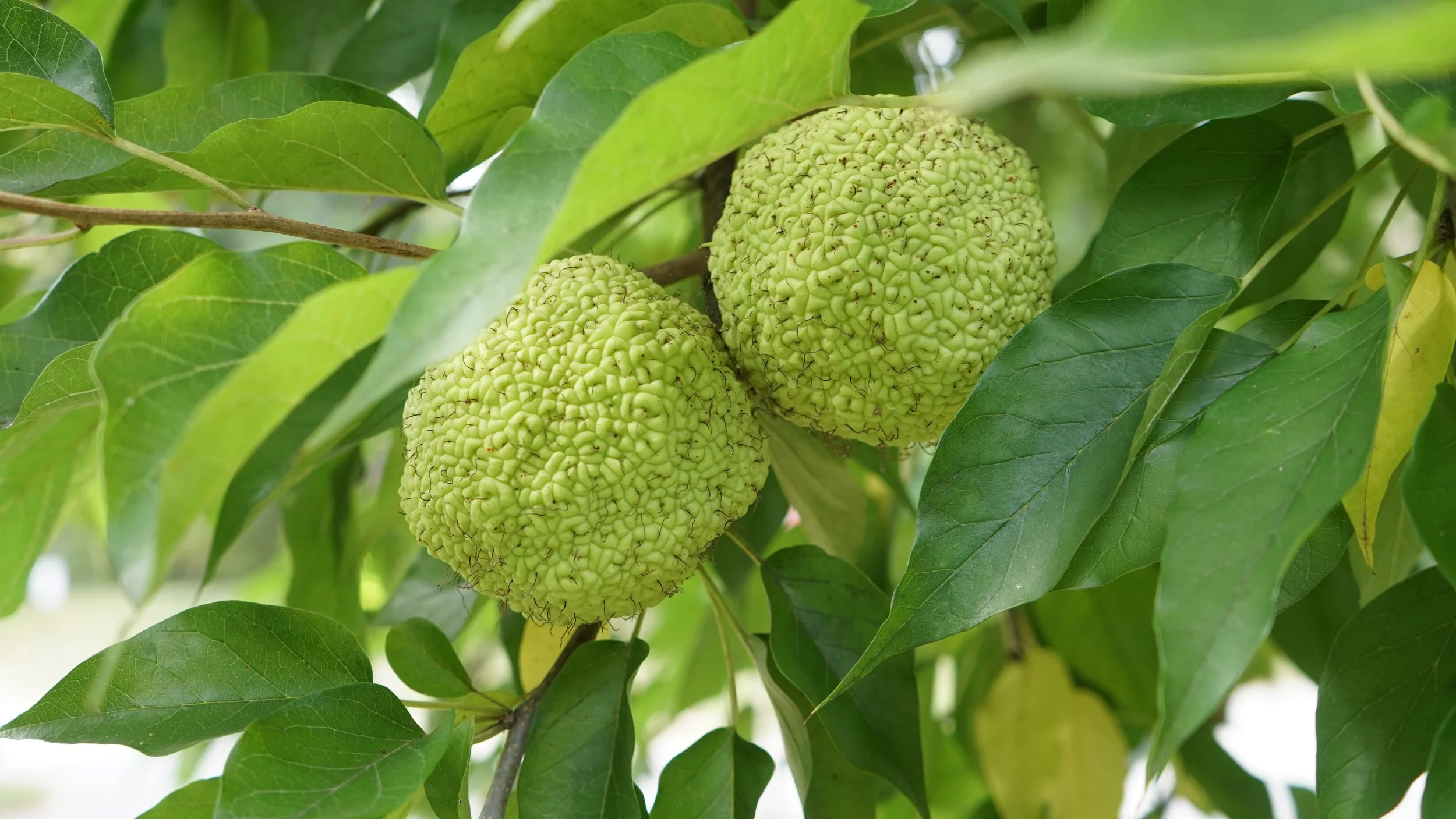
It is a Maclura pomifera, or commonly known as an Osage Orange tree — it is actually part of the Mulberry tree family. Check out Wikipedia for all the deets. In short it is a small deciduous tree (meaning the leaves fall off). It is native to Southern and Central United States, originating in the Red River area of Oklahoma, Texas, and Arkansas. It travels easily and lives in a bunch of different type soils. But what makes the tree memorable are the softball size green fruit it produces.
Pick one up. It is actually a multiple fruit, like a pineapple or a fig, formed from a cluster of flowers. Each bump, or "gyrus," is the expanded and fused individual fruit, while the crevices, or "sulci," are the result of the irregular boundaries between them. This makes the fruit look “brain-like”. If the fruit gets cut or damages (throw it hard onto the cement), it oozes a sticky, white, bitter latex, and its pale, dense interior contains hundreds of small, edible seeds.
What do you do with the fruit?
What don’t you do with it? amirite? Actually, don’t eat it. It is not breadfruit (see above).
But let’s go into the uses, so you can bring home as many as you can to do crafts and decorations around your house.
Decorations
Eventually, the air and cold will make the bright green turn yellow and then brown. Until then, Osage Oranges look amazing in wreaths, table displays, and front steps.
Dyes
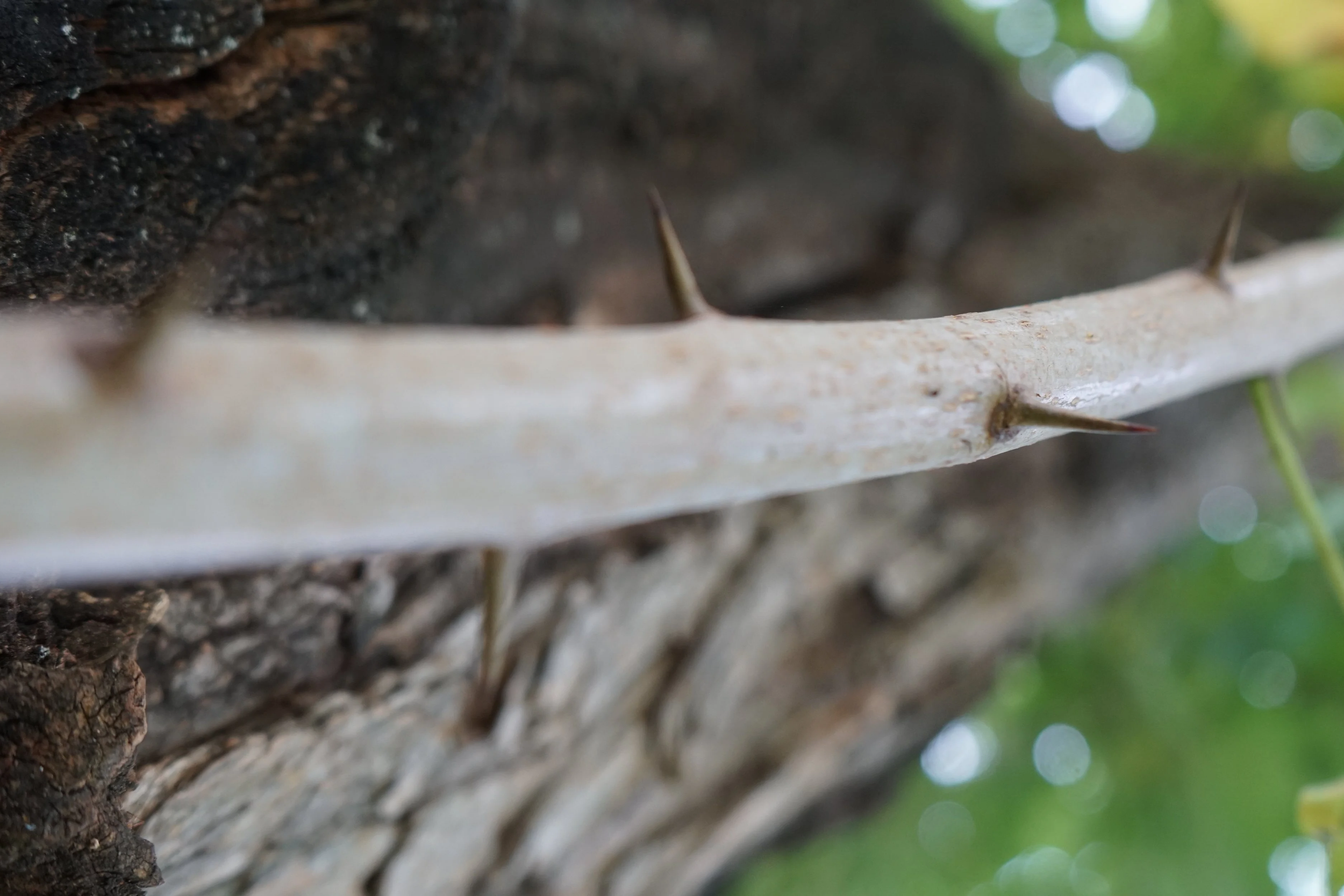
The wood of the Osage Orange or “bois d'arc” tree yields a soft and rich yellow for dyes. We will leave harvested branches for you to take, please do not cut your own.
Watch the thorns. Dye resources here.

Things to watch out for
You can pick out the seed to eat or to press for Pomifera oil, but be warned the latex inner liquid is super sticky and it takes a lot of seeds to do anything fun.
And if you leave these on anything wooden the latex is hard to remove once dried.
As far as I know, you can’t make alcohol out of the fruit. I have tried, but I’m not a brewer. My attempts made something like diaper juice and not the good kind. Let me know if try and if you have any success. Actually, I especially want to know what went wrong.
To continue an olfactory metaphor, if you bake the fruit, or cook it, your house will smell like used diapers. Lessons learned over and over again. You have been warned.
Do not eat the Osage Orange like an apple, or breadfruit. You will not enjoy the process.
Ok, but what good are they? They are fun to throw and hot stuff. Since these trees are often allowed to take root near streets, it is fun to watch cars run over the fruit. As always, please be aware of traffic. This is important, you don’t want to hit a car with this dense fruit, AND you do not want to be hit by the car running after a stupid green fruit.
Oh, and the thorns suck. Having such huge spikes definitely makes sense if you think about the fauna present 13,000 years ago when the tree developed. Mastadons and Giant Ground Sloths were huge and could consume massive amounts of foliage, so these thorns slowed down the main consumers of the osage orange. This tree is considered anachronistic, meaning it belongs to another age or it can be called a “Ghost of Evolution”. There are several trees in the neighborhood that are often considered anachronistic due to the antiquated method of seed dispersal: the HoneyLocust, the Sweet Gum and the Dogwood.
We love talking to all of the people who stop and share their insights and stories around this and other trees. Please drop a line to share your thoughts and images of anything you have made. We would love to build an archive for this amazing tree.

Join the OOAS
We love talking to all of the people who stop and share their insights and stories around this and other Osage Orange trees.
Please drop a line to share your thoughts and images of anything you have made. We would love to build an archive for this amazing tree.
Stickers are available. Just stop me in the yard or drop a note.